LOT 109
check for more images below, if available
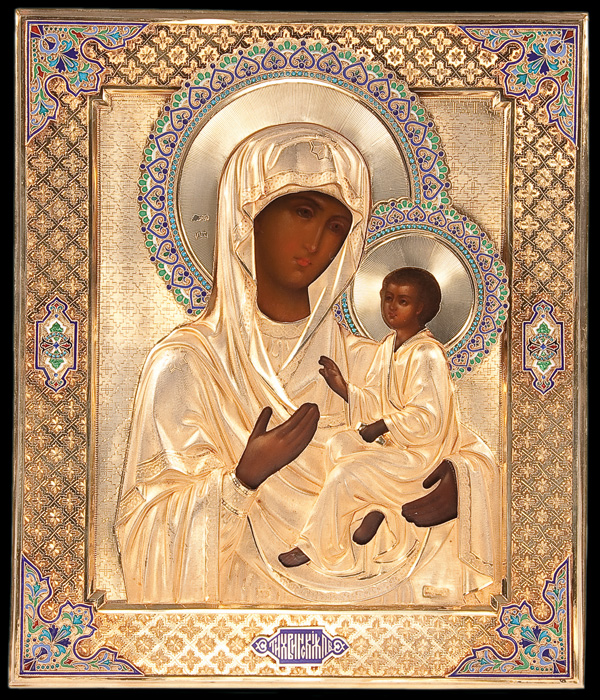
Lot 109
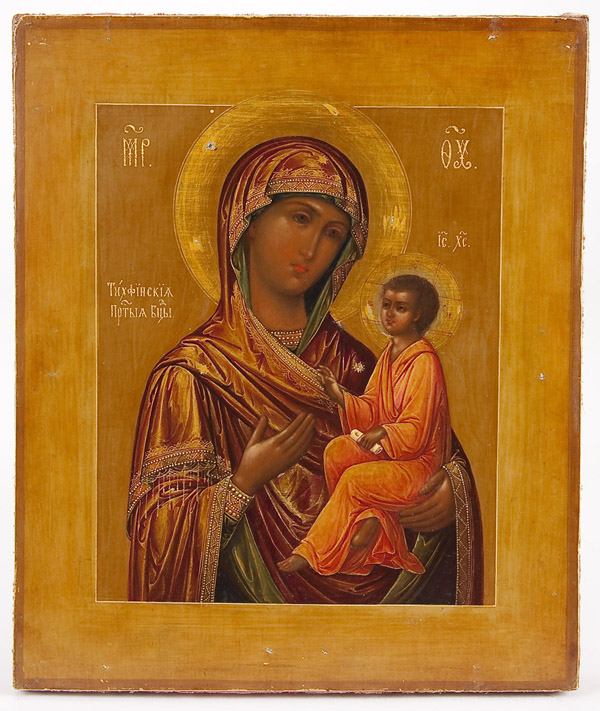
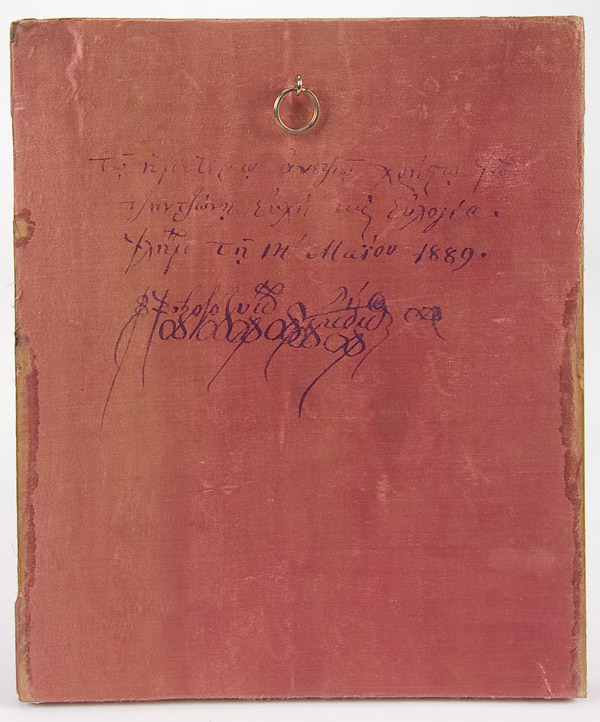
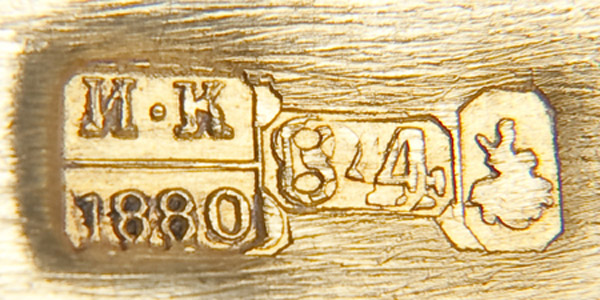
AN EXCEPTIONAL RUSSIAN ICON OF THE TIKHVIN MOTHER OF GOD, 1880. The finely painted icon rendered with extensive gilt highlights and cross hatching tonal development. The entire painted panel overlaid with a heavy multiple -piece and exquisite silver-gilt and repousse riza with attached cloisonnE enameled haloes, side, corner, and title plaque. Hallmarked Moscow, dated 1880 and with Cyrillic makers mark AK- most likely for Antip Kuzmichev, a noted silver and goldsmith active in Moscow circa 1856-1897. The verso of icon with original silk covering exhibiting an old dedicatory inscription in highly stylized lettering and dated 1889. 12.25 inches x 10.4 inches (31cm x 26.5cm). The Tikhvin Mother of God is one of four immediately recognizable Russian Miracle-Working images of the Mother of God. Along with the Vladimir, Kazan, and Smolensk, the Tikhvin has a long and interesting history. The original Tikhvin was believed to have been painted by Saint Luke, who sent it as a gift to the ruler Theophilus at Antioch. After Thoephilus’ death it went to Jerusalem. In the 5th century it was sent as a gift to Pulcheria, sister of Theodosius the Younger, in Constantinople. It was sent by Eudokia, wife of Theodosius. The Church of the Blachernae was built to house it, and it remained there for over five hundred years under the title Hodigitria. In 1383, knowing of the approaching fall of Constantinople to the Turks, the icon left that city for Russia (it is not uncommon in these origin stories for icons to act like living beings). Some fishermen saw it in a circle of light over Lake Ladoga, and then it appeared again near Lake Onega, then on the Oyat River, and then twice more, moving ever closer to Tikhvin. Finally, it appeared on the bank of the Tikhvinka River in 1383, during the reign of Dmitriy Donskoy. The icon was placed n a wooden church which then burned in 1390, but the icon was found unharmed in a juniper bush. In 1395 it survived another fire, and in 1500 yet another. In the 16th century it was placed in a brick church dedicated to the Dormition, and in 1613, after the vision of a blind widow, it was used to repel the Swedes by being carried in a procession, following the instructions given by the Mother of God. Its feast day is June 26. In 1944 During the Soviet oppression of the Russian Orthodox Church, the icon was rescued, eventually coming to the United States for safekeeping by future Archbishop John Garklavs. In 2004, the original Tikhvin icon was transferred back to Russia and returned to its home village of Tikhvin.
Estimate:
$7,000 - 10,000
€ 5,250 - 7,500


All items are sold “AS IS” and there will be no returns based on condition. The items sold are often of considerable age and will exhibit wear, usage and damage often not listed in the catalog entry. The absence of condition remarks in the catalog entry DOES NOT mean the item is in perfect condition. Prospective buyers are in ALL CASES responsible for determining the physical condition of lots. No employee or agent of Jackson's International Auctioneers and Appraisers is authorized to make on our behalf or on that of the consignor any representation or warranty, oral or written, with respect to any property. Therefore, if a prospective bidder has not examined the property to their satisfaction before the sale, or his/her agent has not inspected the property, Jackson's recommends that they not bid on the property. All dimensions are approximate. The condition of frames is not guaranteed.